
What is the treatment like?
“In 2019, Dr. Niels Pedersen published a field study on GS-441524 in cats with FIP, which demonstrated that this antiviral drug can achieve remission in most cases treated over a 12-week period.”
“In 2019, Dr. Niels Pedersen published a field study on GS-441524 in cats with FIP, which demonstrated that this antiviral drug can achieve remission in most cases treated over a 12-week period.”

The study “The small-molecule nucleoside analog GS-441524 is a molecular precursor of a pharmacologically active nucleoside triphosphate.” “These analogs act as an alternative substrate and RNA chain terminator for the viral RNA-dependent RNA polymerase.” “We determined that GS-441524 was not toxic to feline cells at concentrations as high as 100 uM.” “It effectively inhibited FIPV replication in cultured CRFK cells and in naturally infected feline peritoneal macrophages at concentrations as low as 1 uM.”
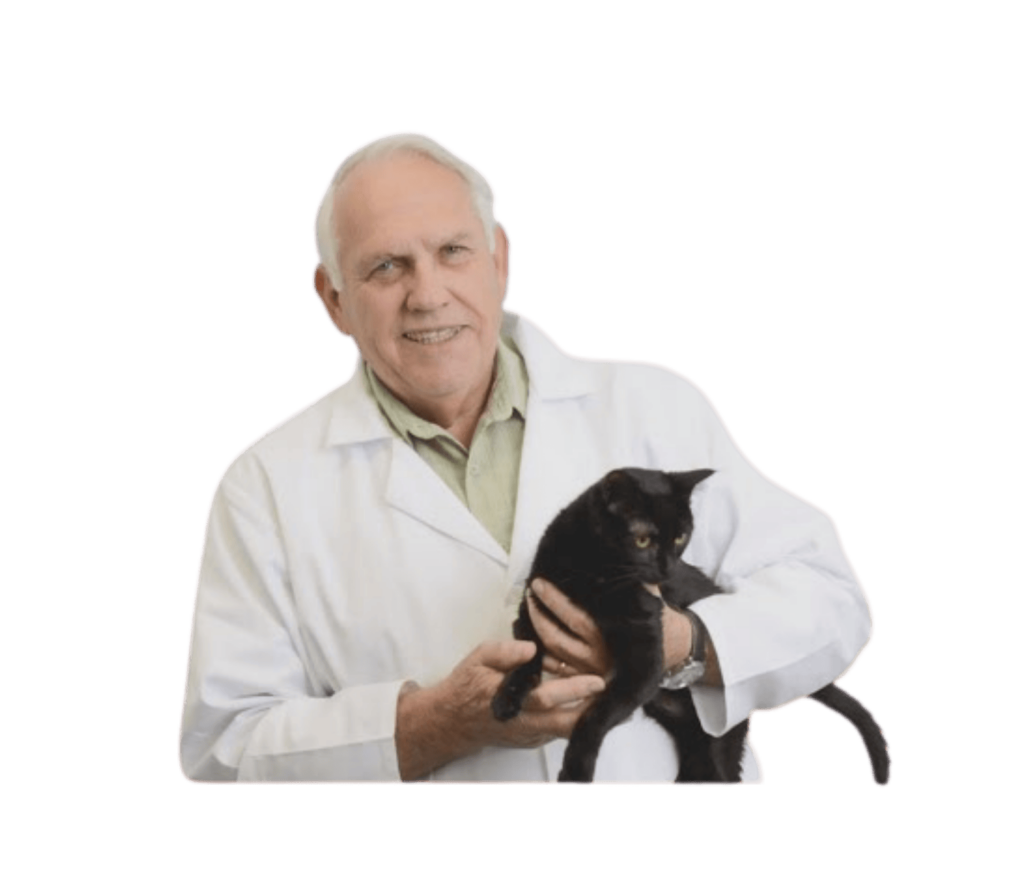
➤ Niels C. Pedersen, DVM PhD, Distinguished Professor Emeritus
➤ Center for Companion Animal Health
➤ School of Veterinary Medicine, UC Davis
The same criteria are used as those applied when monitoring the treatment described in the JFMS field study.
Caregivers should monitor temperature, weight, activity, appetite, and clinical signs of illness on a daily and weekly basis.
Blood tests are required, including at least a CBC (complete blood count) and a comprehensive metabolic panel, which should include levels of protein, triglycerides, globulins, and albumin; these should be performed at the start of treatment and every 4 weeks.
Weight and these values are critical for monitoring. The goal is to have a healthy, alert, and active cat by the end of week 12, with normalized values. Substantial weight gain during treatment is essential.

The response to treatment usually occurs within the first 24 to 72 hours, and cats return to normal within the first 2 to 4 weeks of treatment.
The fever should subside within the first 24 to 48 hours.
Red blood cell counts return to normal after the first 7 days of treatment, except in cases of immune-mediated hemolytic anemia. In these cases, where red blood cells are being destroyed, the protocol is 4 mg/kg of corticosteroids to stop the hemolysis. Anemia should not persist by week 4.
The ascites disappears visually within the first 15 days and on ultrasound by week 4, at which point only a small amount of residual fluid may be visible.
Symptomatic care and support may be necessary to stabilize cats that are in critical condition at the time of diagnosis or during the first few days. Abdominal effusions should not be drained unless they are compressing the chest and preventing normal breathing, in which case they should be drained slightly. This is in contrast to pleural effusions, which should be drained.
Symptomatic treatment includes administering fluids and electrolytes to treat dehydration, antibiotics if a secondary bacterial infection is suspected, and anti-inflammatory medications. A blood transfusion is rarely necessary.

Dosages vary depending on the protocol and the brands used; it is standard practice to start with the dosages listed below (for GS 441524 in injectable and oral forms, provided the manufacturer confirms that this is the absorbed dose):
If the expected response is not achieved, it is recommended to increase the dose by 2 mg/kg.

One of the most difficult decisions is determining when to end treatment. Some cats, especially younger ones with ascites, can recover within 8 weeks, even though the treatment lasts 12 weeks. Other cats may require dose increases or even an extension beyond the 12-week period.
This is the case with the treatment of hepatitis C in humans, which is also a chronic RNA virus and requires 12 weeks or more of antiviral treatment.
Unfortunately, there is no simple test to determine whether the pet has recovered, and the fear of a relapse leads owners, veterinarians, and treatment advisors to recommend extending or even increasing the dosage.
Treatment with GS-441524 should be administered daily for a minimum of 12 weeks to ensure the highest probability of success. Cats that complete the 12-week treatment and remain symptom-free for an additional 84 days are considered officially cured of Feline Infectious Peritonitis (FIP).
Relapses generally occur within the first 10 days following the 84-day treatment period, but they can happen at any time during this period. Relapses require a second 84-day treatment course at a higher dose and are generally more aggressive. The success rate following a relapse is 96%.
It is crucial to monitor the cat’s temperature, weight, activity, appetite, and clinical signs on a daily and weekly basis. Additionally, blood tests are required at the start of treatment and every 4 weeks, including a complete blood count and biochemistry panel measuring proteins, AG, globulins, and albumin.
Do you have any questions or need more information about FIP treatment? Fill out the form and our team will contact you as soon as possible.